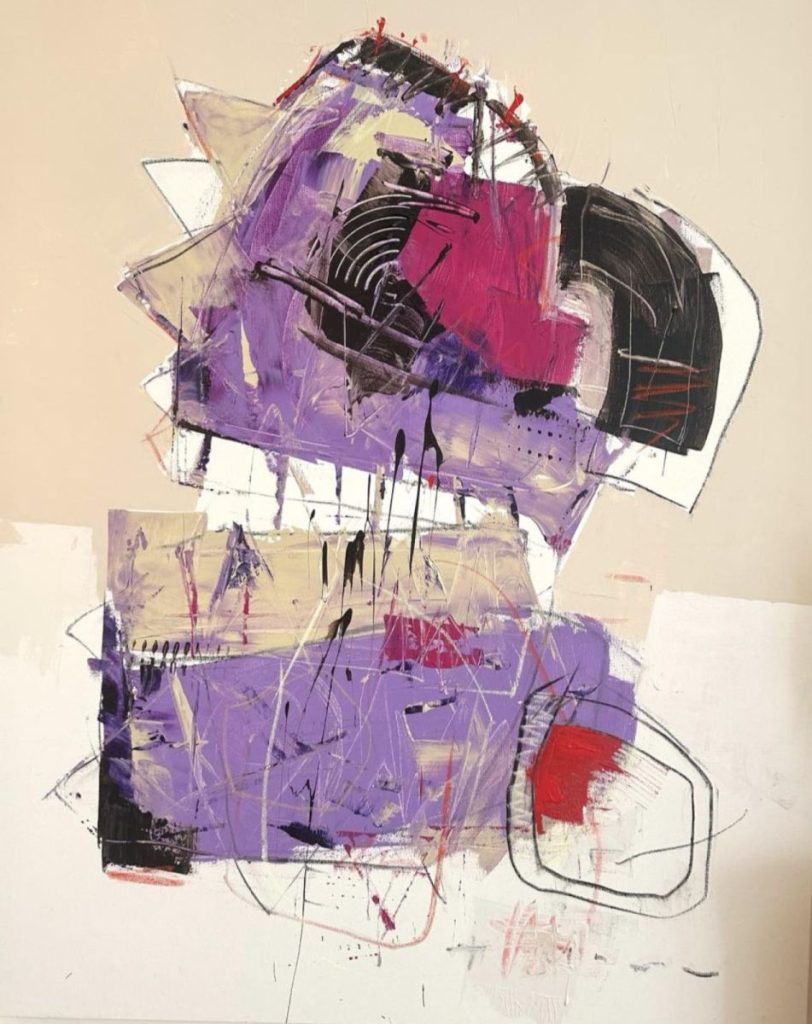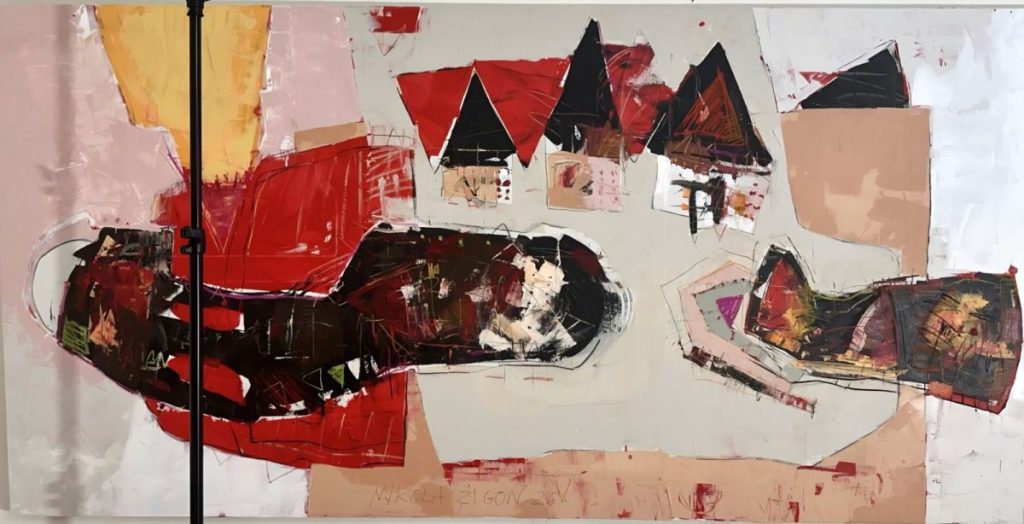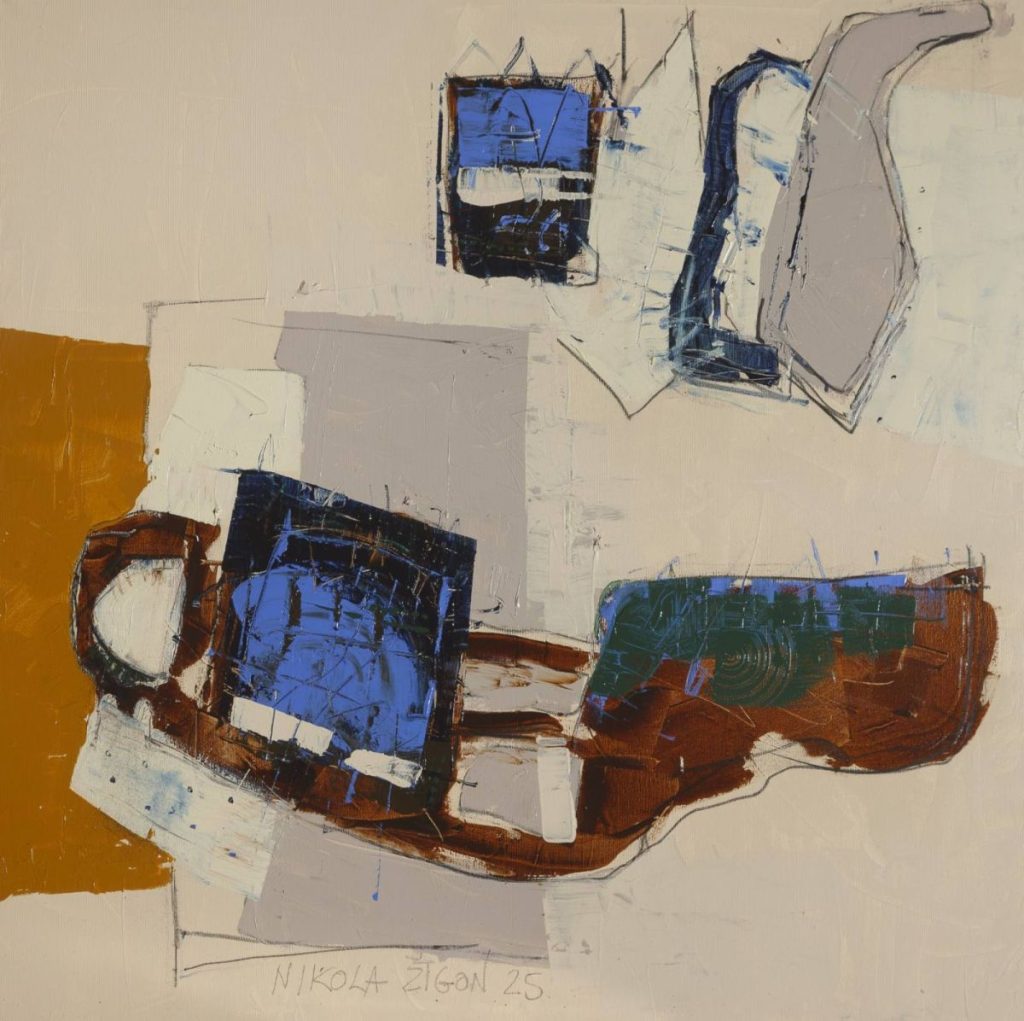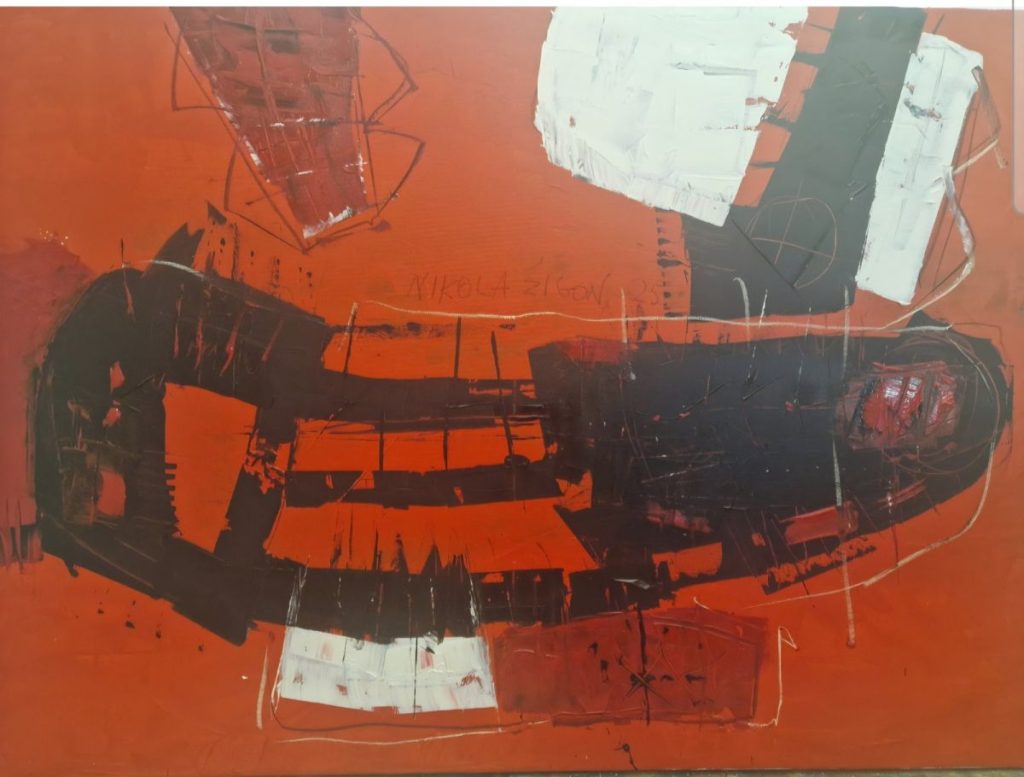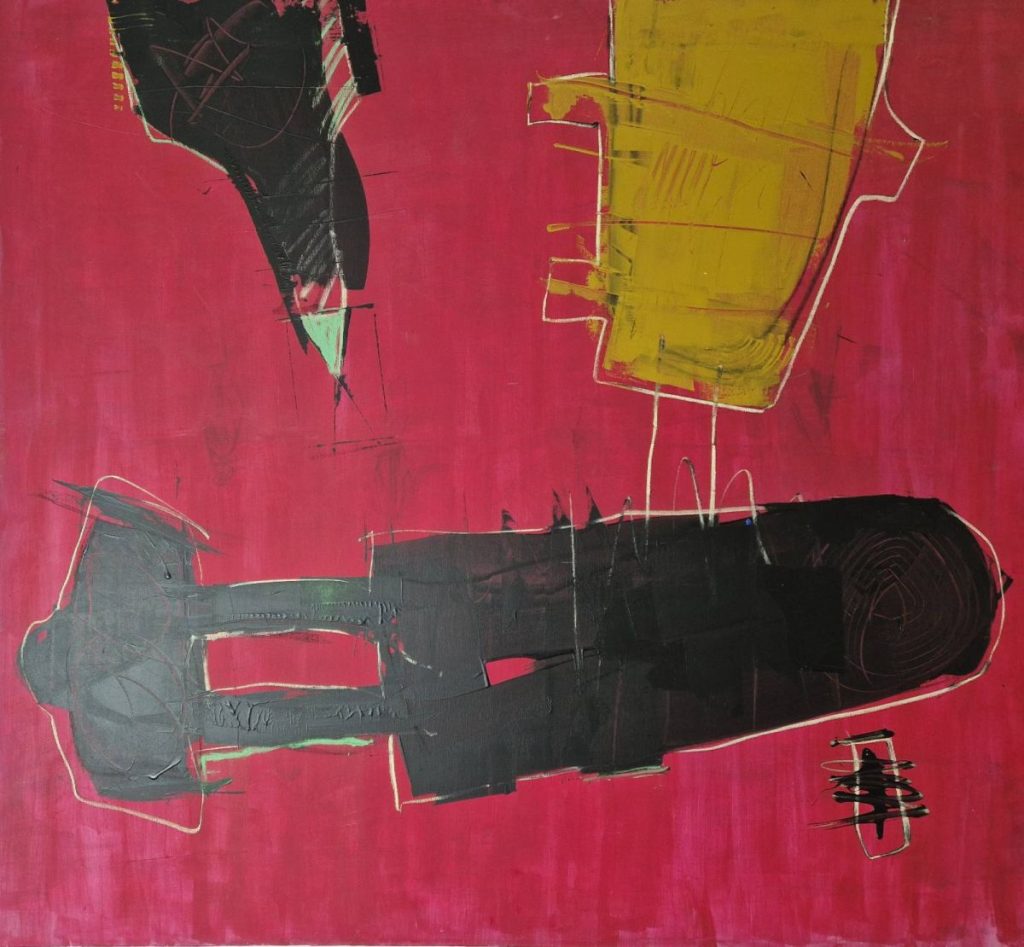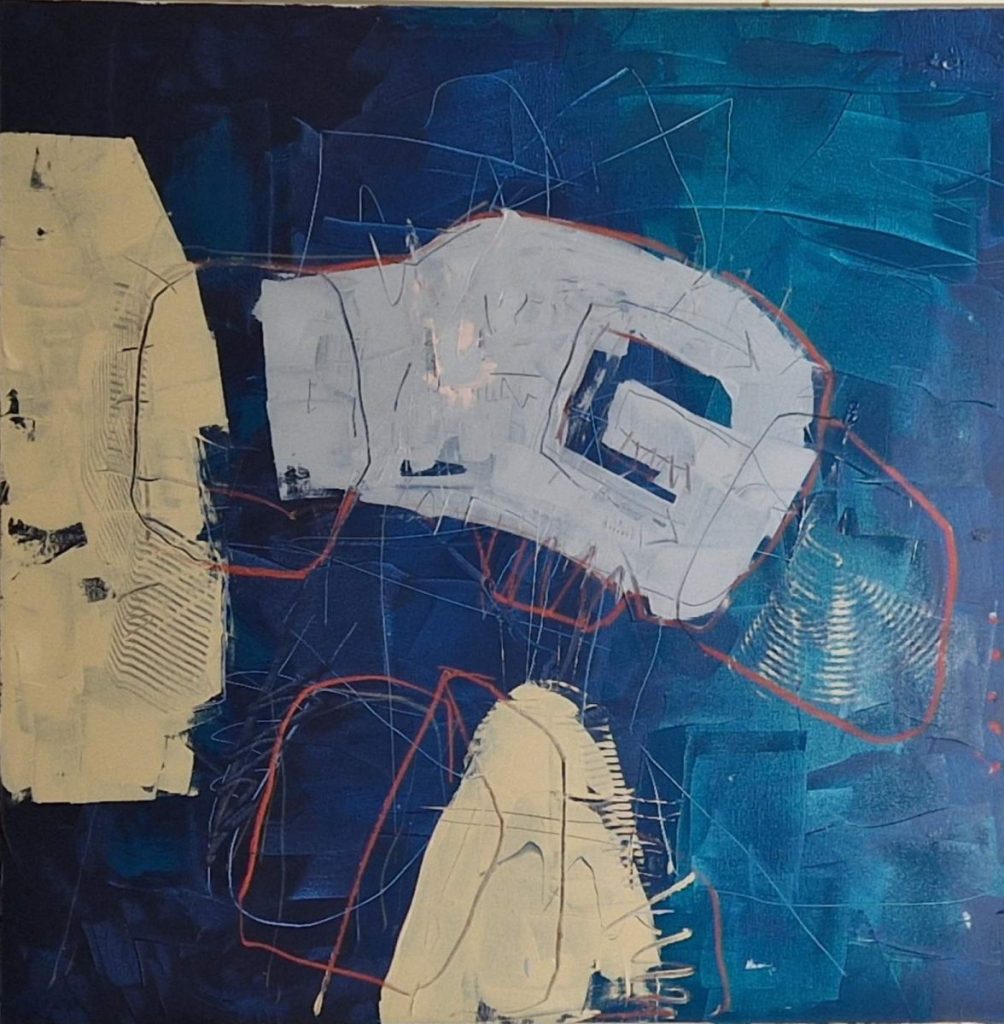
Nikola Žigon was born in Ljubljana in 1958. He graduated from the Faculty of Fine Arts in Belgrade in 1991. During the early period of his artistic career, he focused on drawing, video art, and artistic installations, which were presented to the public at the Gallery of the Student Cultural Centre in 1992 and at the Salon of the Museum of Contemporary Art in 1995. In the 2000s, he lived and worked in Paris, where he exhibited at the Gallery of the Yugoslav Cultural Centre and at the International Gallery. In 2002, he became an exclusive artist represented by the prestigious Prom Gallery in Munich. His paintings are part of the permanent collection of the Würth Museum in Künzelsau, Baden-Württemberg, Germany, as well as numerous private collections throughout Europe and the United States. Since 2004, Žigon has exhibited his White Paintings at the Prom Gallery in Munich, as well as in Portugal and at the Eurocentar Gallery, Progres Gallery, and DKSG in Belgrade. In 2011, he presented his exhibition Moonlight Mile at the Apollonian Palace in Piran, and in the same year exhibited at the Arte Reale Gallery in Milan. In 2018, Žigon dedicated his exhibition As If It Happened Once (Kao da je bilo nekad), presented at X Vitamin Gallery, to his mother, actress Jelena Žigon. This act of remembrance and reflection on personal memories generated a bright and fresh energy, opening a new chapter in the artist’s creative life. Following several years abroad, Žigon returned to the cultural and artistic scene of Belgrade in 2021 with the exhibition The Smile Has Returned to the City, presented at the Žigon family home in Senjak, Belgrade. His most recent cycle of paintings, entitled Paintings in E Minor, inspired by music, consists of large-format works presented at Štab Gallery in 2023, followed by smaller works exhibited at the One and Only Gallery in Portonovi and Sanjaj Gallery in Belgrade in 2024. In these works, the artist embraces colour without abandoning form, figure, or gesture, seeking an equal contribution from each in embodying the painter’s psychophysical presence within his own work.
ABOUT THE WORK
“They are there primarily to evoke emotion. The atmosphere of a painting is extremely important; what modern, abstract painting introduces into an image is pure energy. I believe that within the composition of a drawing or painting, in the relationship between colours and the immediacy of the line, one can find a creative energy without which any attempt to artistically interpret reality becomes impossible. Energy must govern the painting, but it must not disrupt the atmosphere we have been discussing. If it is overstated, it can destroy the sincerity that must exist within a painting. My formula is simple: sincerity plus energy—that is a good painting. And somewhere this coincides with Nietzsche: the world is one enormous energy without beginning or end, an ocean of forces raging within itself, eternally changing. They return through the ebb and flow of their forms, creating the most complex from the simplest, and the most tranquil from the most fiery; then they return from complexity to simplicity, while the play of contradictions transforms into the pleasure of harmony. In this way, Nietzsche actually defined the painting…”
“To paint a picture is like dreaming a dream, and since a dream is a divine concession granted to human beings, a particular state of consciousness, every painter is a somnambulist who transcribes his dream for the eyes of those yet unborn. Civilization will wither and grow old precisely because of its neglect of dreams. Everything has been created and taken from a dream. Everything that exists. If the world continues to create at this pace, soon there will be nothing left for us to dream about. A dream is what computers lack; it is silent rapture, it carries the taste of the universe. A dream is a direct admission by consciousness that it is ineffable…”
Nikola Žigon
… “His entire body of painting can be understood as an architectural and constructive procedure—an attempt to establish a structure, to build an armature capable of supporting all these fluid and intangible sensations. In creating his paintings, he sought neither to reduce nor to abstract the visible world, but rather to give form to abstract content, translating it into the language of painting, ‘sewing’ for it a painted garment endowed not only with visual but also with haptic qualities. This approach primarily resulted in informal-abstract compositions. These paintings, which emanate refinement, meditation, and at times melancholy and tenderness, are characterised by a distinctive northern rationality, restraint, gradualness, and, to some extent, detachment. Gradually, Žigon begins to unite two of his own natures: the northern, Germanic one, and the ‘warmer’, more impulsive Slavic and Mediterranean one…”
Danijela Purešević